
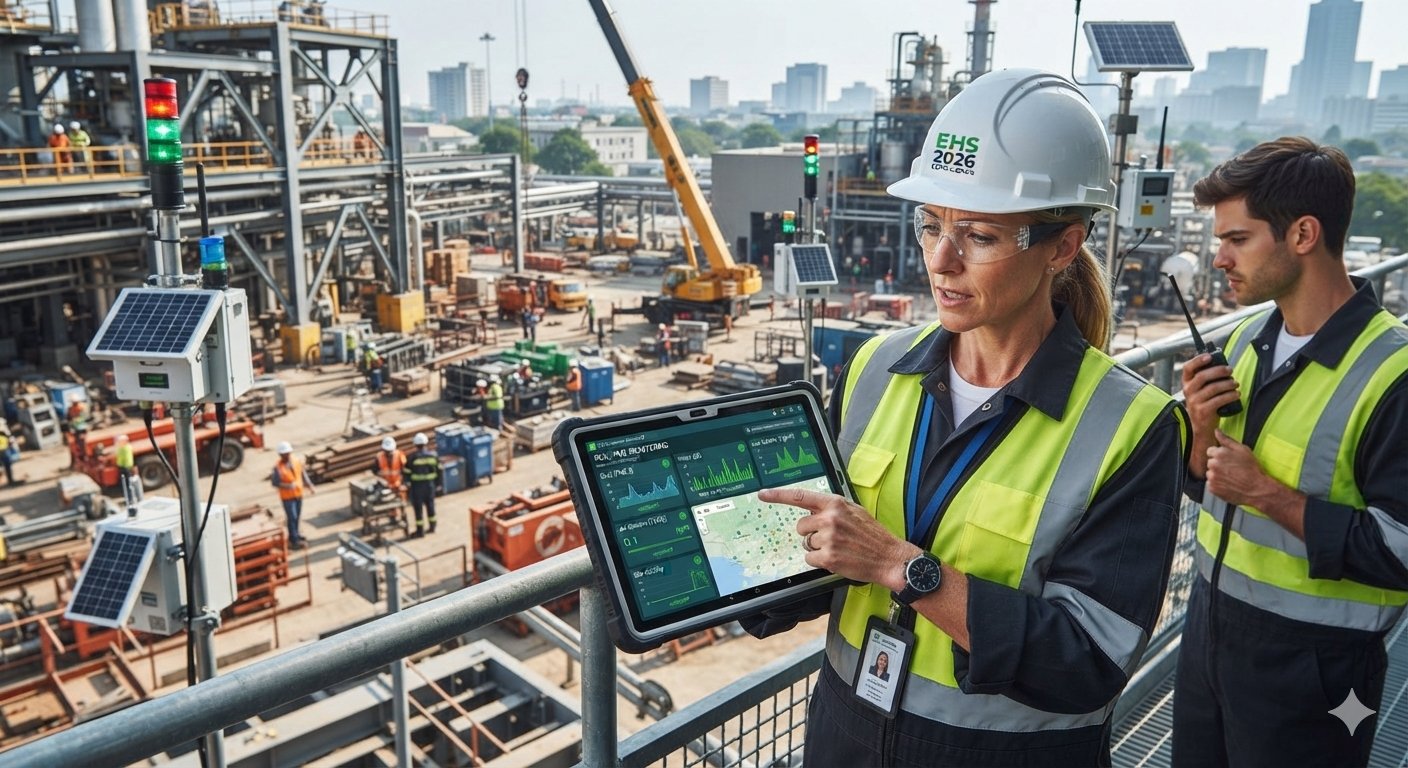
EHS Compliance RealTime Monitoring 2026
Building Stronger EHS Compliance Programs with Real-Time Environmental Monitoring
EHS compliance in 2026 is being reshaped by tighter regulations, more complex operating environments, and rising expectations from regulators, clients, and communities. Periodic audits and static documentation no longer meet the bar; organizations are expected to demonstrate that risks are actively managed in real time, not just reviewed after the fact. Real-time environmental monitoring—covering dust, noise, gases, and other parameters—offers compliance teams continuous visibility and defensible records that traditional inspection cycles cannot match. This article explains how EHS leaders can strengthen compliance programs by weaving real-time monitoring into daily operations, and how flexible equipment access makes this achievable without heavy capital investment.
Why Compliance Teams Need Continuous Visibility, Not Just Periodic Reports
Traditional compliance models rely on scheduled audits, monthly inspections, and periodic sampling. These approaches provide useful checkpoints, but they leave significant blind spots between reviews, during which excursions, dust events, or noise complaints can occur without being documented. In 2026, EHS leaders increasingly prioritize real-time visibility as one of their most important strategic goals, moving away from manual, fragmented, and checklist-heavy approaches toward integrated data and continuous oversight. Digital compliance—supported by real-time monitoring and audit-ready data—is now viewed as a source of cost reduction, efficiency gains, and more resilient operations, rather than simply a regulatory obligation. For environmental parameters specifically, continuous monitoring allows compliance teams to detect issues as they happen, respond quickly, and maintain a clear, time-stamped record showing when a problem arose and how fast it was resolved. This shift matters because regulators and clients increasingly expect proof of control, not just proof of measurement; a monitoring program built only around static reports and infrequent checks struggles to meet that expectation.
Key Monitoring Use Cases for EHS Compliance
Real-time monitoring adds the most value in specific, well-understood scenarios that EHS teams encounter regularly. Construction and demolition projects often deploy dust and noise monitors at site boundaries to demonstrate compliance with permit limits and to manage community concerns, since continuous air quality monitoring—particularly for fine particles such as PM10 and PM2.5—is essential to verify whether dust control measures are actually working. Vibration monitoring is also common on demolition and construction sites, helping teams protect nearby structures and respond quickly if vibration levels approach agreed thresholds. Industrial facilities use similar principles indoors, monitoring air quality near workstations or process areas to keep exposures below internal and regulatory limits. Temporary events such as equipment start-ups, shutdowns, and maintenance turnarounds benefit from short-term, intensive monitoring campaigns designed to catch unusual emission or exposure peaks that would otherwise go unnoticed. Mapping these use cases against specific regulatory and contractual requirements helps compliance teams decide where continuous monitoring will deliver the greatest risk reduction and where periodic checks remain sufficient.
Integrating Monitoring Data into EHS Procedures
Monitoring becomes truly effective only when it is embedded in everyday EHS procedures, rather than treated as a stand-alone technical exercise. Modern EHS software platforms increasingly allow teams to access real-time data, manage compliance tasks, and monitor safety performance from a single interface, connecting field data directly to action plans. Compliance teams can link real-time readings to clear response thresholds, escalation paths, and documentation steps. For example, dust readings above an agreed limit might trigger immediate control measures such as increased water suppression, a supervisor notification, and a follow-up verification reading, all automatically logged in the compliance system. This kind of integration turns monitoring dashboards into working tools rather than passive displays, and it strengthens audit trails by showing not just that a threshold was exceeded, but exactly how the organization responded. As continuous monitoring, automated notifications, and integrated data become standard features of EHS software, teams that build these connections early will be better positioned to respond quickly to both operational incidents and regulatory inquiries.
Deploying Compliance Monitoring with Rental Equipment
Many organizations need enhanced monitoring only during specific phases of their operations—high-risk projects, permit renewals, construction milestones, or new equipment commissioning—rather than as a permanent, year-round capability. In these situations, renting equipment is a practical way to access field-ready, certified monitors without the cost and complexity of long-term ownership. Specialized rental providers, including those focused on industrial hygiene and environmental monitoring, offer calibrated dust, noise, vibration, gas, and multi-parameter instruments on flexible terms that can be scaled up for large or high-risk projects and scaled down once monitoring needs decrease. Eco-Rental Solutions supports this approach by providing a well-maintained fleet of environmental and industrial hygiene monitoring equipment, allowing EHS teams to deploy temporary, targeted compliance monitoring programs exactly when and where they are needed, without carrying idle inventory between projects. This model helps EHS teams raise their compliance standards and respond to 2026’s higher expectations for real-time visibility, while keeping capital expenditure, calibration, and maintenance responsibilities firmly under control.